We are off on a 7-ish month adventure that will take us from the mid-west to Europe, to the Arctic Circle, down to the southern Cape of Africa, and back to Europe, before we journey home.
We spent two days in Queens as we began our journey eastward. Why Queens? Well, it’s near the airport, but more importantly, our hotel was within waking distance of Spaceships that were featured in Men in Black. So, why not!
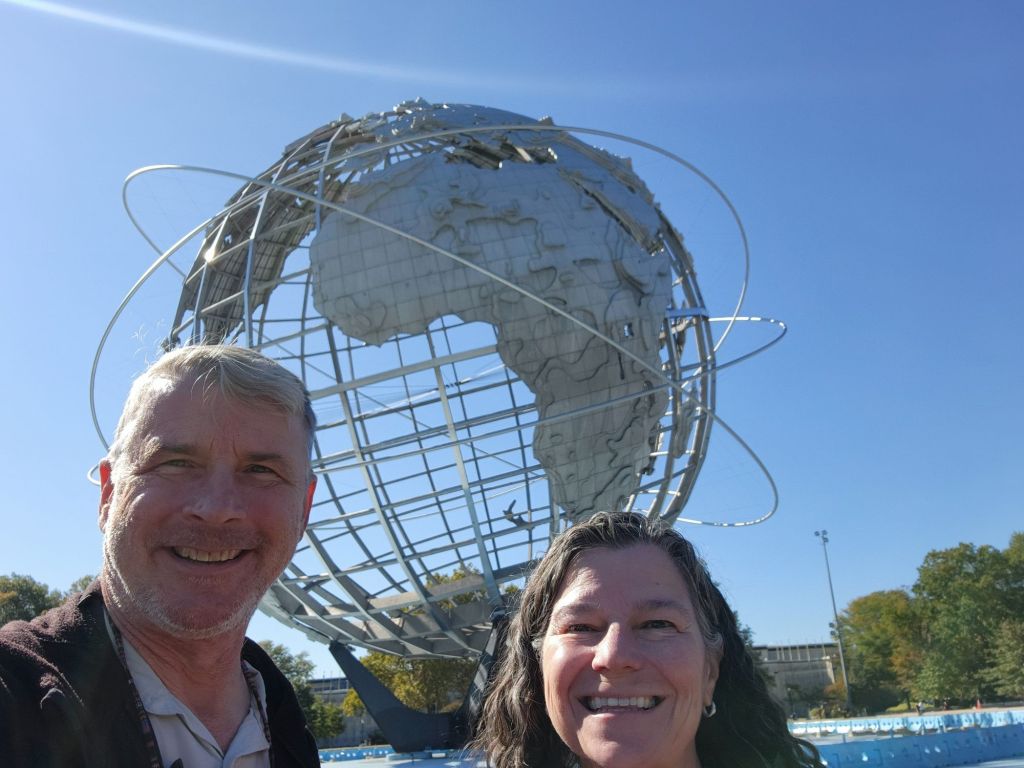
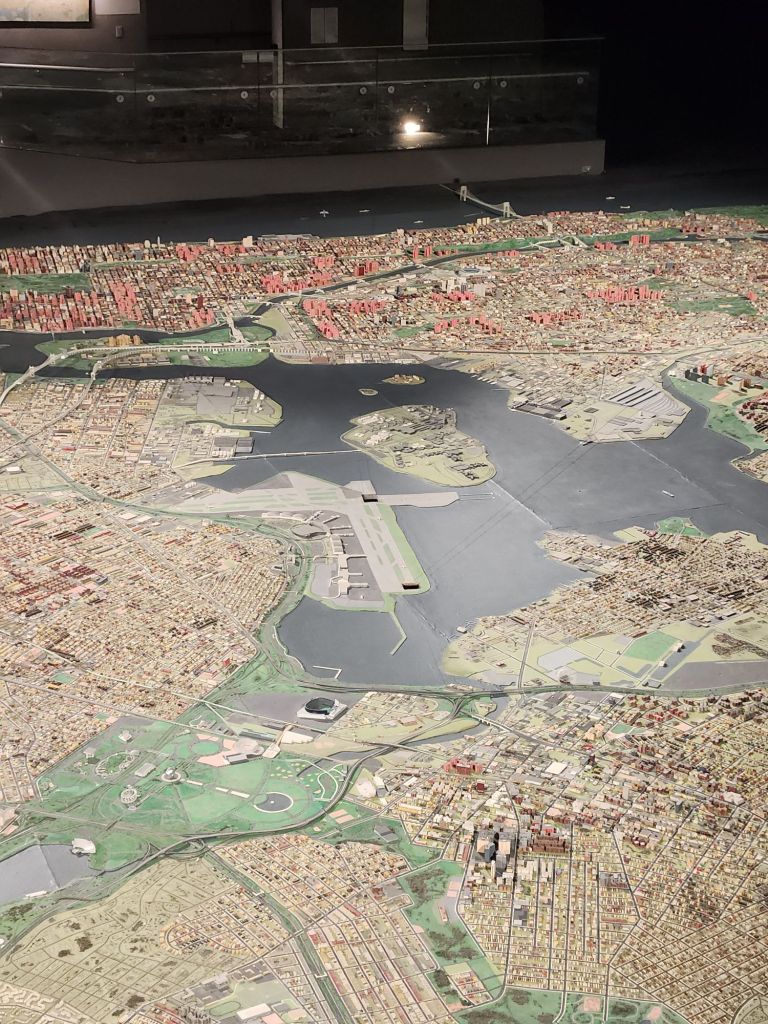
There they are! Still under repair from the damages caused by the bug, and the fly ball!Of course, we had to visit the Unisphere! Since we’ll be taking a ship up the west coast of Africa, I thought this perspective was perfect for a selfie! Dan did a little research and decided a visit to the Queen’s Museum was in order. It is in one of the buildings built for the 1965 World’s Fair. It had art, and lots of items from both World’s Fairs. One of them was a “well, that wasn’t at all what I expected and it was amazing!” scale model of NYC. It even had planes suspended on wires, and rotating in and out of LaGuardia airport. It was updated in the 1990s, so it is a remarkable view of the city. There weren’t too many informational placards, but what were there were pretty interesting.A slightly zoomed in view to show some of the detail. They also cycled the lights in the room for a 24 hour cycle, the map had areas that glowed, like parks and other green spaces.
The walk there took us by the USTA center, which brought to mind many Labor Day weekend afternoons, sitting in the TV room with my Grandma watching tennis. She liked to sneak away from the rest of the family to watch it and let me join here. It was a great way to have her all to myself in the midst of a bigger family visit. And, since we both enjoyed playing tennis, we had opinions. She was a much better tennis player than I was.
We love traveling by ship! And this adventure began in NYC when we boarded the NCL Sky for a 14 day Transatlantic crossing. We pulled out of the port as the sun was setting and were treated to a pretty iconic view of the Statue of Liberty!
This is the third time we have cruised in or out of NYC, and it is always a treat to see this sight. Early morning, dusk, or after sunset.
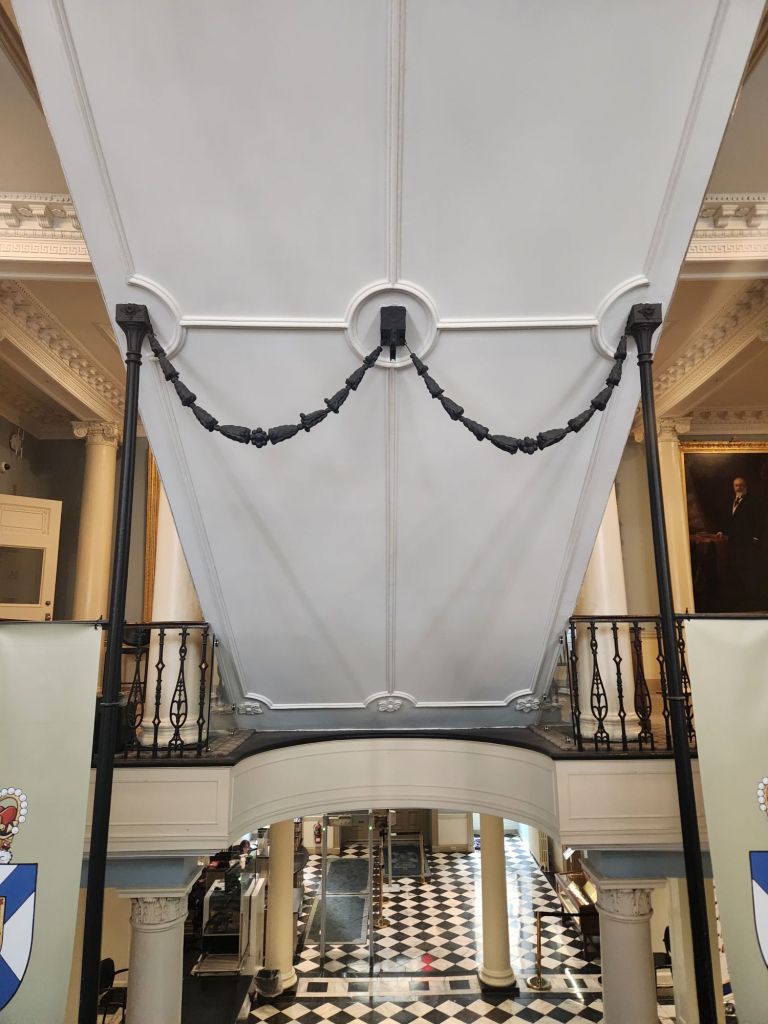
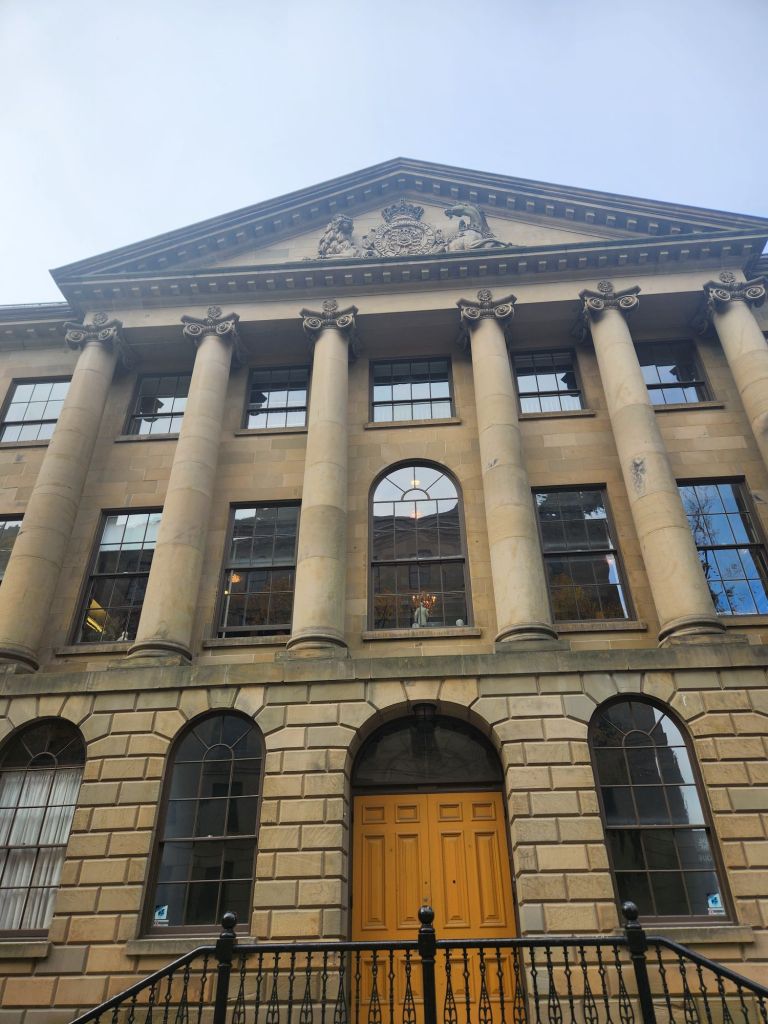
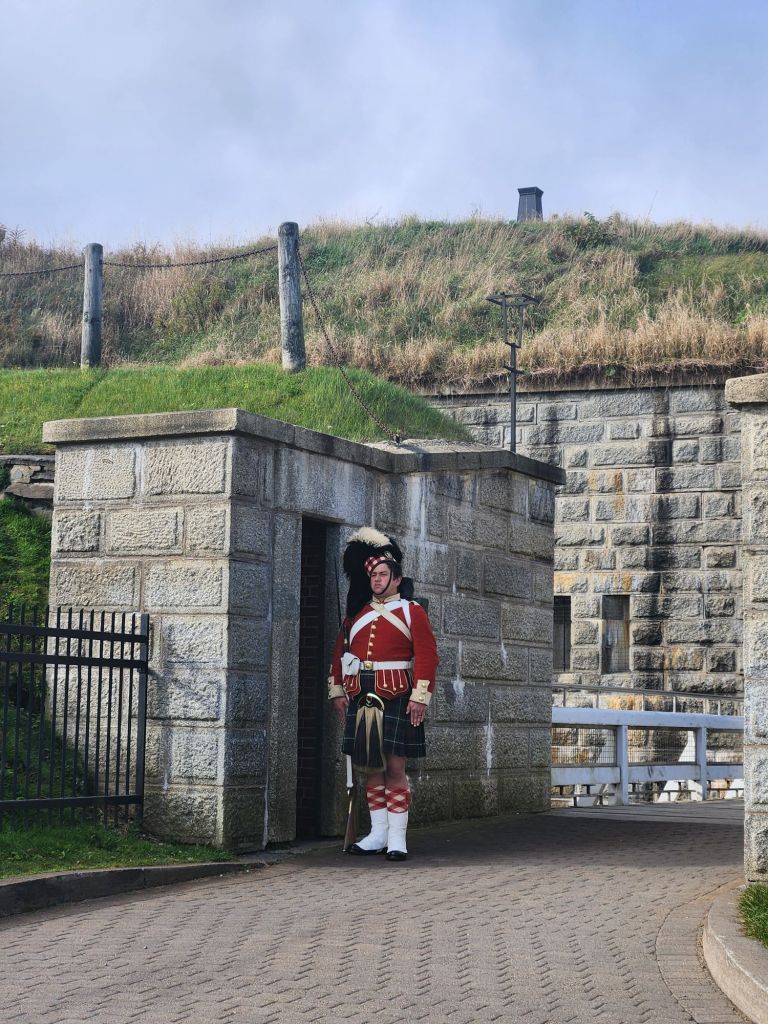
Our crossing, I can’t remember if this is technically a “repositioning cruise” or if it is a Transatlantic cruise, not sure it matters, and for that matter, I don’t know the criteria anyway, so I will just call it a “crossing.” Anyway, the plan was to stop in Halifax, Nova Scotia, and St. John’s New Foundland before we headed out to sea. Alas, weather had other plans. We were able to stop in Halifax, but missed St. John’s. So, instead of visiting two Canadian Provinical Parliment buildings, we only got to see one. It was a gem, though, lovely 1810 ish architecture, gracious rooms, and chatty and helpful Security guards. Then we proceeded up the hill to the old fort and wandered around for several hours.
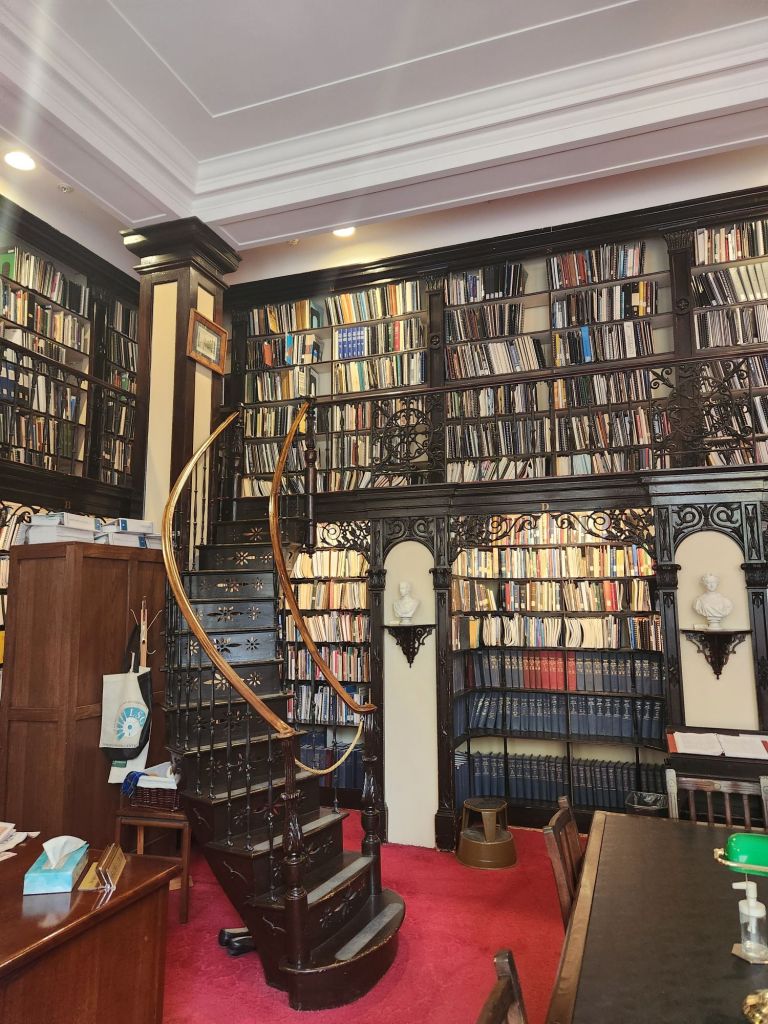
There is no rotunda, as it was not a design element of the time, but some lovely supports on the stairs.The chambers.The Library. It used to be the courtroom. While we were looking around a young woman who was interning there said there is still a jail cell in the basement. Alas, that was not on the tour.The front of the building. You can’t see them, but the door nobs all have a maritime theme, given Halifax’s location, and the main doors have fish tails.Looking up at the clock tower between the city and the citadel.Guarding the gate. They had interpretive guides around the fort in period dress, they fired some cannons and demonstrated the muzzle loading rifles used to defend the area.There were lots of cannons, several galleries with nicely done exhibits about the city, the history of the region, and Halifax and Canadian involvement in various wars.
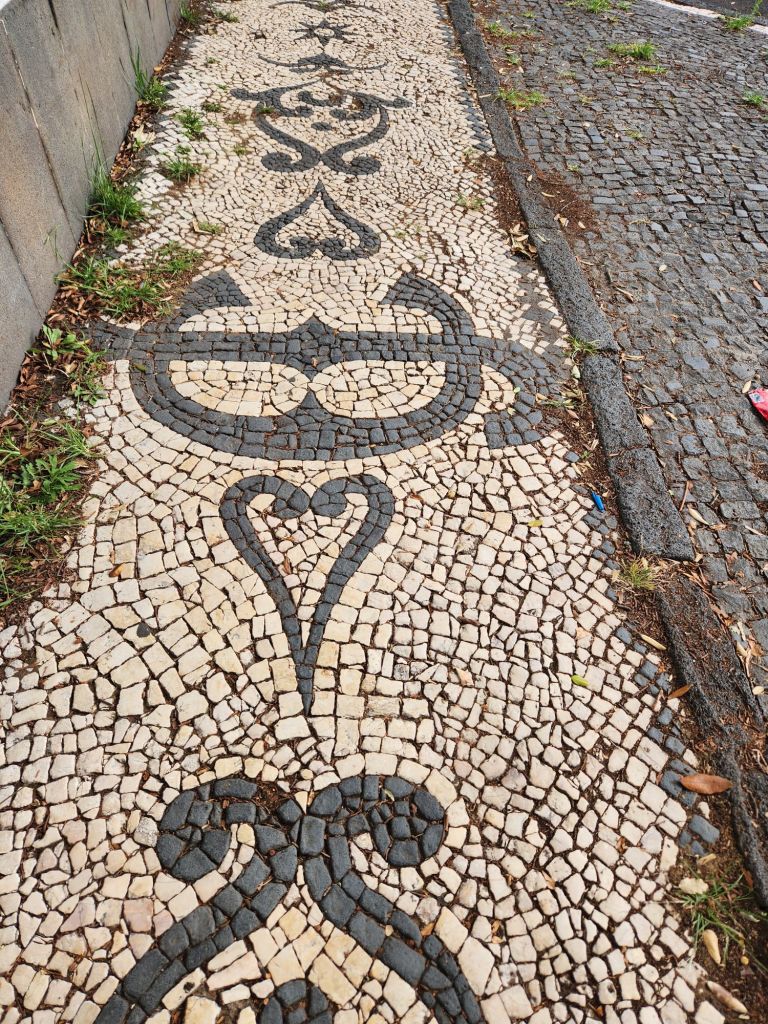
From the Canadian coast, we headed east toward the Azores Islands, a vocanic archpelego located at the triple junction of the North American, Eurasian, and African continental plates! I won’t yammer on about the geology, but I do enjoy learning bits each time we visit. Dan and I had a brief stay in Punta Delgada on the island of Sao Miguel, in 2021 and enjoyed our stay. This time, with just a day trip, we decided to wander the city instead of doing an excursion. We found the local gardens, enjoyed wandering some neighborhoods we missed on the last visit, and reaquainted ourselves with Portugese beer.
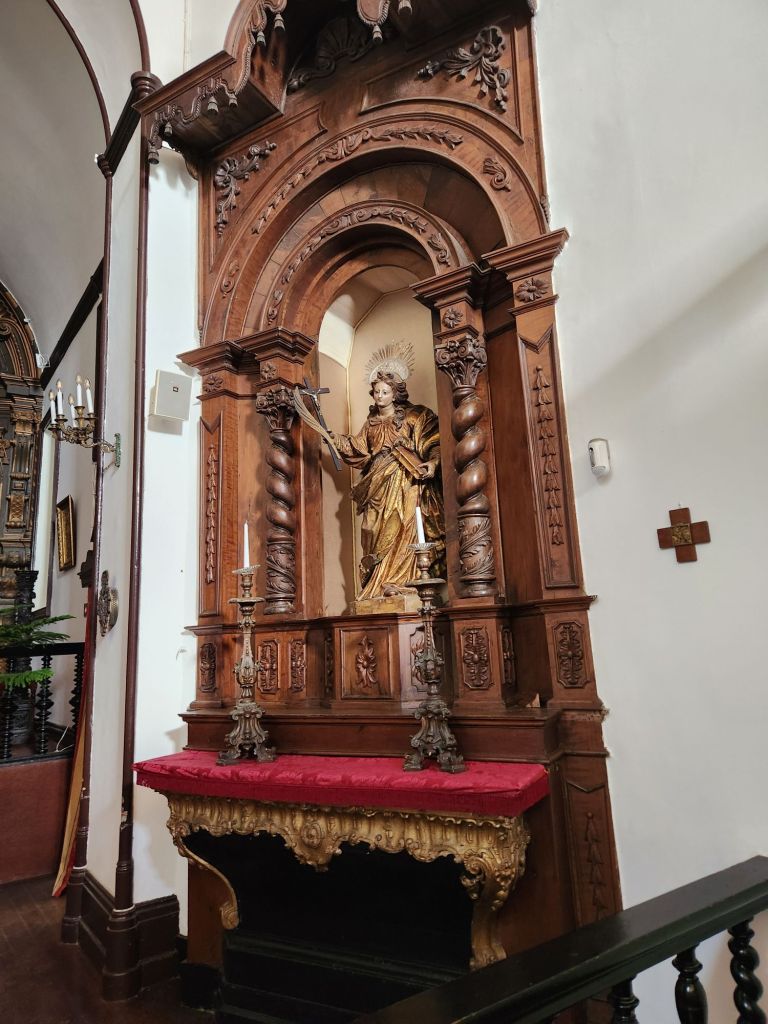
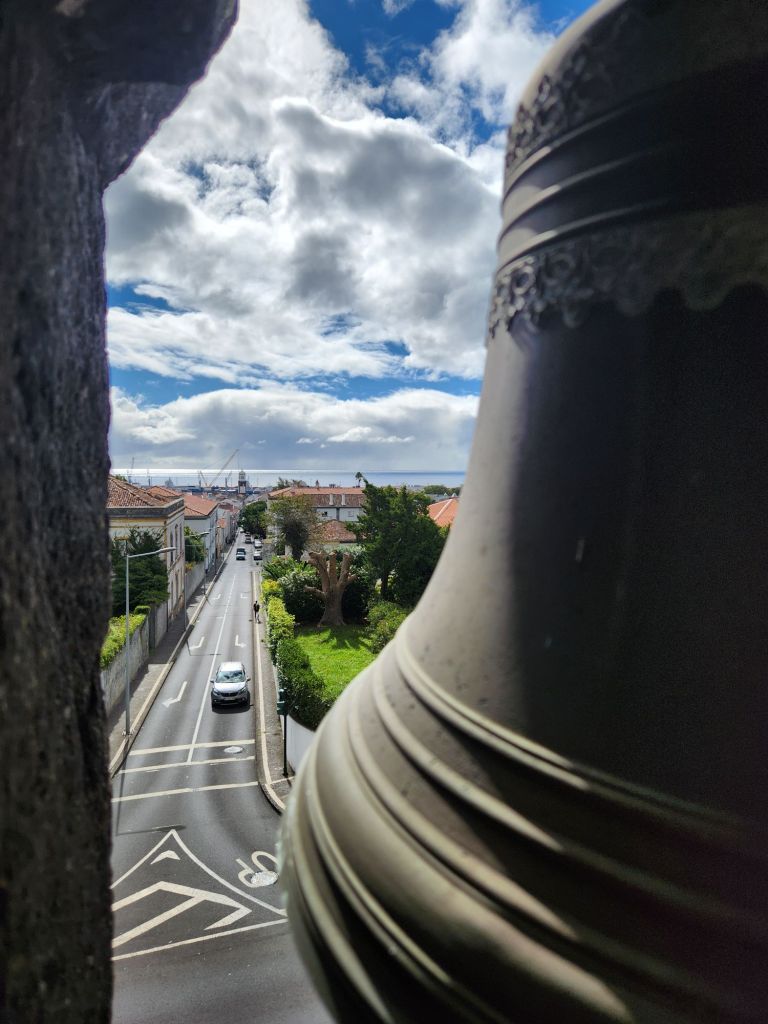
Some of the lovely calcadas – Portugese mosaic sidewalks – that are all over the place in the city. These are outside a government complex. The armed guard at the gate didn’t look like he was letting random “I like to tour government buildings” tourists mosey in, so we carried on.A local citizen who was interested in botony collected a wide array of samples of the flora that would grow well in the region. His estate is now a lovely park with nice views of the city.A church is also attached to the gardens, which I would name, but the map and brochure I was sure I hung onto is nowhere to be found.You can climb up to the bell tower, here is the view back down to the port.One of many lovely churches in Punta Delgada. This one is now a museum. The Portugese came across the islands in the 1400s and have had a presence here ever since.
From Punta Delgada we had a few sea days before going through the Straits of Gibralter (at night, so no photos this time) and on to Spain’s Mediterranean coast. We were scheduled for three stops in Spain before we landed in Barcelona, on the southern coast in Motril, and on the Balearic Islands of Ibiza and Majorca. A planned strike impacting the Port of Barcelona had us missing the stop in Majorca, but we did hit the other two lovely towns.
Motril is a stop where most folks go to Grenada, but we just took the shuttle to town and checked things out. It was a bit quiet due to the All Saints Day Holiday, but the town was lovely, and the Pre-industrial Sugar Factory Museum was open!
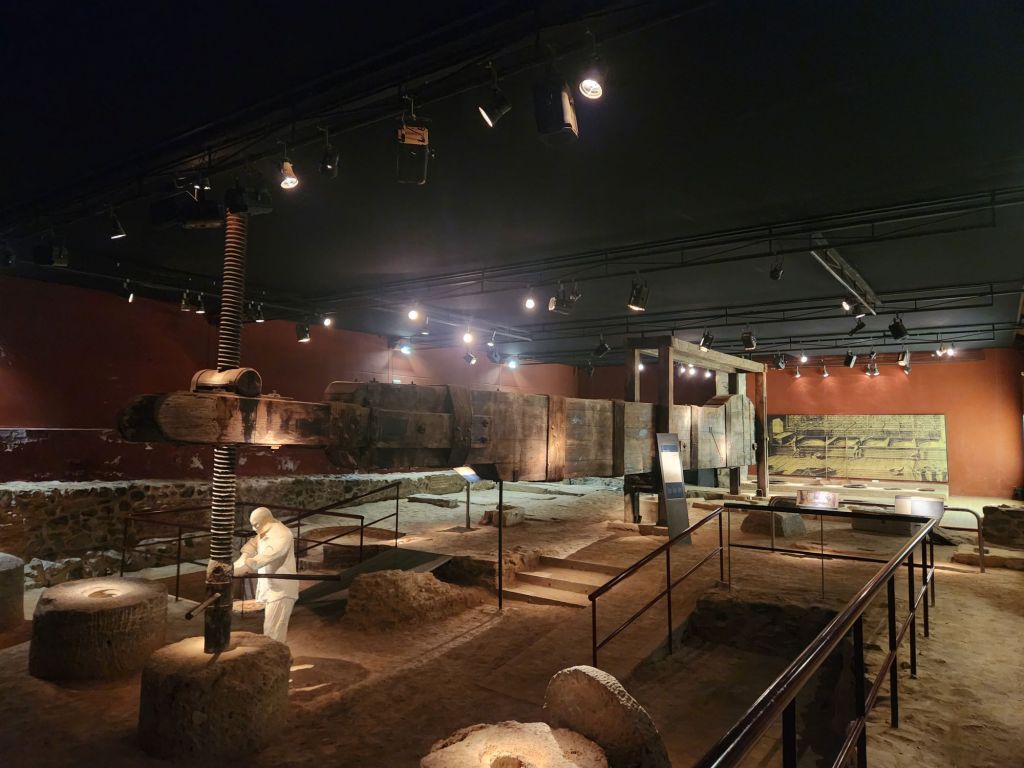
Motril is now a major agricultural area, primarily fruits and cherry tomatoes. But, back in the day, it was a major source of sugar traded in the Mediterranean and up to Great Britain. This caused its own set of problems as deforestation and the monoculture of sugar cane caused flooding, and other problems. The museum is the only one in the Mediterranean, and the site is one of only 5 known former sugar mills of their era. The process for making the sugar was brought to the region by North Africans, and the trade routes were related to the commercial power of Genoa.
The mill, this was a major advance prior to industrialization and allowed for more sugar to be processed, the cane was fed through this mill to squeeze out the juice.The lighting makes this photo a little hard to interpret, but it is a 15 meters long, and there is a double fulcrum process (please don’t expect me to explain it, suffice it to say, the guide did an excellent job) that takes the already milled cane and gets even more juice out of them. The second process is very similar to the processes used to get olive oil.The levers are above these stones with channels. The juice they squeezed out would flow through these channels to a collection point for the boiling of the juice to get the sugar.After boiling for hours, the concentrated sugar cane was put in these clay pots. The pot on top has a hole in the bottom for the molasses syrup to drain, leaving the sugar loaf.Two examples of sugar loaf. The larger one is what would have been produced here. The size was standard and was how the sugar was taxed. Apparently, the regional government, in Granada, levied very high taxes on the sugar, and that, combined with deforestation (loss of fuel to run the fires), and piracy, made the economics challenging and led to the industry pretty much closing up for many years. It made a comeback in the 1800s when mechanization made the boiling of the sugar cane juice more economical.The city also had a lovely park which was full of people on this holiday.
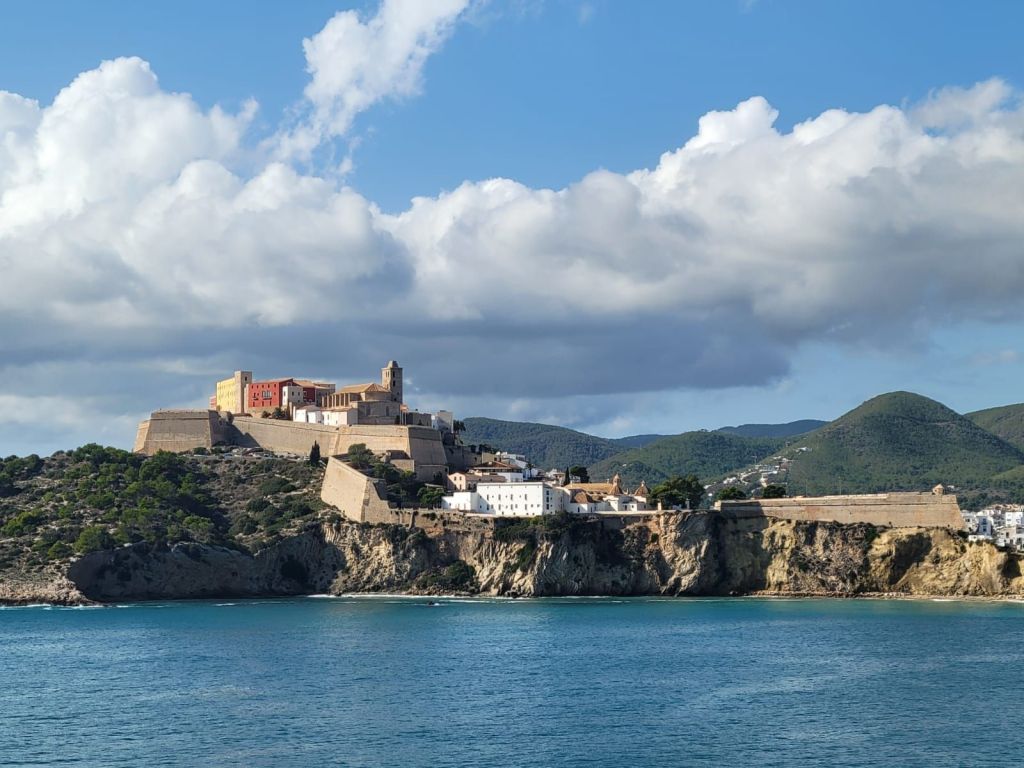
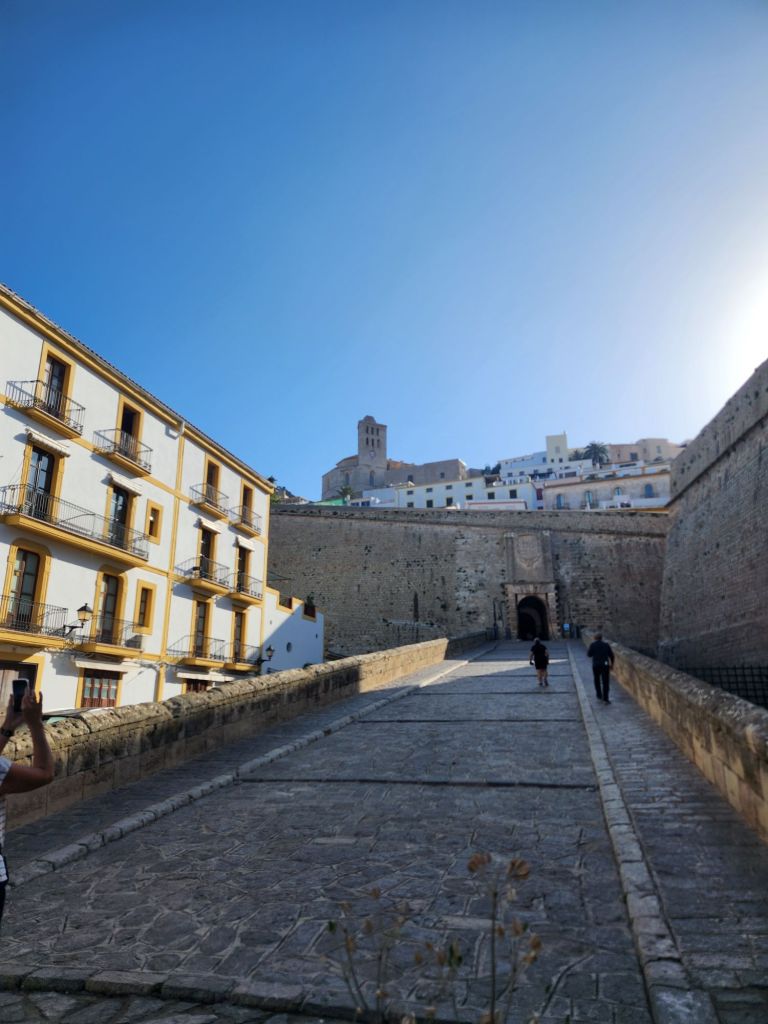
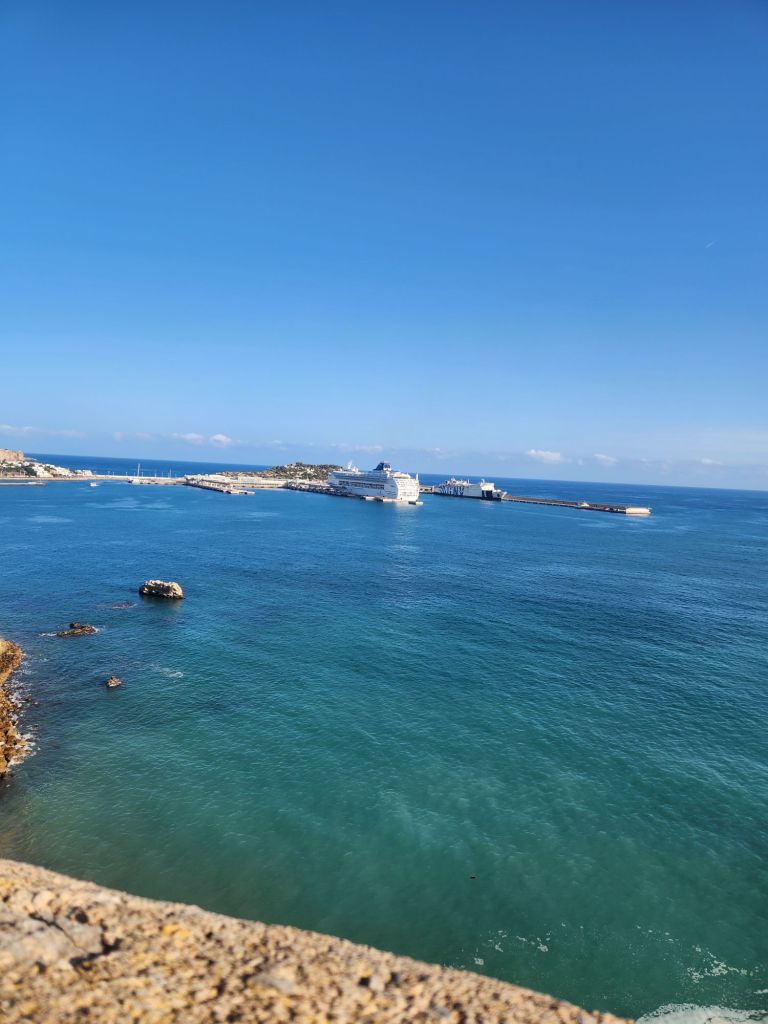
From Motril, we haded to the Ibiza, a popular vacation and party spot! Again, we chose to depart the ship and explore on our own. It was a beautiful day, and we hopped the water taxi from the port to the center of the city. Of course, there was a fortification on the top of the hill. Loyal readers will recognize the theme – yes, we hauled ourselves up there, the forts and castles always have the best views.
A view of the fort from the ship – with a bit of zoom.The gates into the walled part of the city.Some statuary around the gate.Along the way, we met up with someone else who appreciates a good sun hat!One of the many cannons guarding the city. This was a very long and elaborate citadel built over several hundred years. They had really nice signage explaining when and why various fortifications were built. They also detailed how the firing lines worked. It made a lot of forts make more sense!Looking back at the ship from the fort, with the same amount of zoom.The fort after sunset.
Our time on the ship for our crossing was coming to an end. At this point, we learned of the need to skip the last port of call and that we would be docked in Barcelona in the morning. So, I declare the tale of the Great Atlantic Crossing of 24 to be at an end. Our adventures in Spain begin!
When the boat broke down the nice lady from England exclaimed "oh goody, an adventure!" That changed the possible problem into a great story and improved attitudes. It has become the motto for our travels. We hope you enjoy the stories as much as we enjoyed the adventure.
View all posts by Adventures of Dan and Lisa
2 thoughts on “Getting There, 2024 Version”
We always enjoy seeing your photos and hearing about your adventures! Enjoy!!
















 Oh Goody! An Adventure
We always enjoy seeing your photos and hearing about your adventures! Enjoy!!
LikeLike
Amazing pictures!
LikeLike