Today was a blustery, rainy day in the North Coast of Portugal. So, we decided to tour the canning factory down the street from our favorite hotel in the Porto area. We’ve walked by a bunch of times, but there hasn’t been a compelling reason to figure out what goes on behind the doors of the Pinhais Cannery & Co. Building. Well, a quick Google search later, and I’m buying tickets for a factory tour, sardine, and wine tasting included!
We put on our rain gear and made the 10 minute walk through the neighborhood for our tour. As we checked in, Madalena said she had checked out our blog. I am such a bad blogger, but now I have a challenge to my bloggerdom! So, here we go:
The Pinhais cannery has been run by the <singular version of Pinhaus> family since 1920. Three generations, all of them – grandfather, son, grandson – sharing the same name, first and last, and building. Our tour started in the 104 year old entry lobby of the factory.
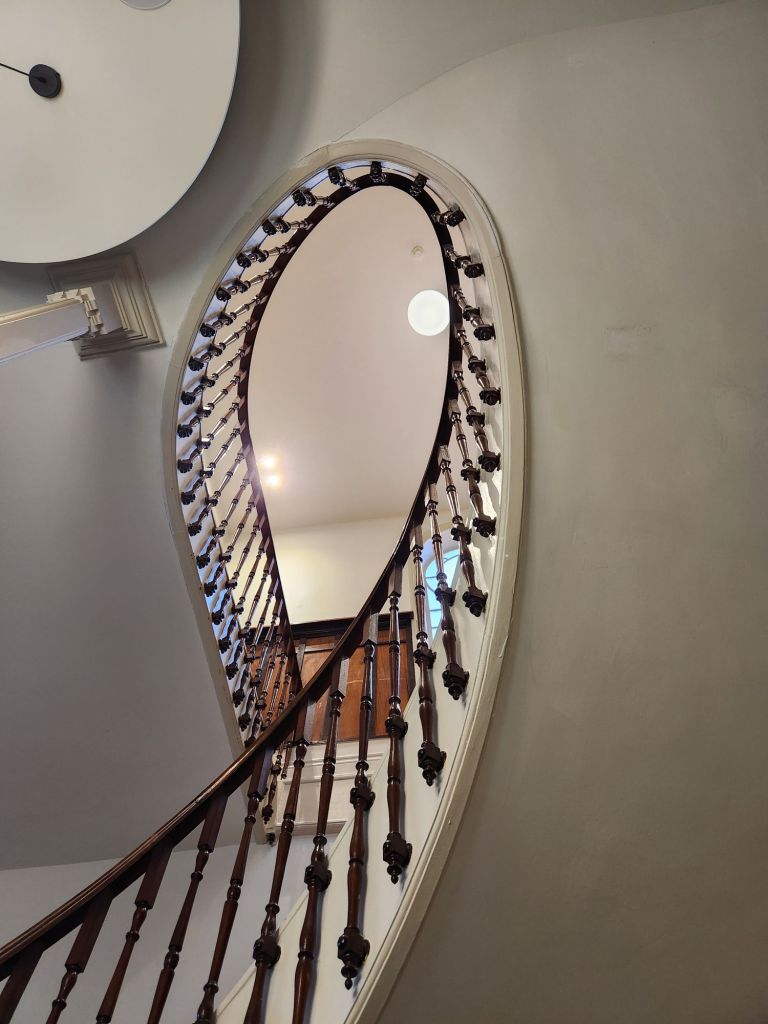
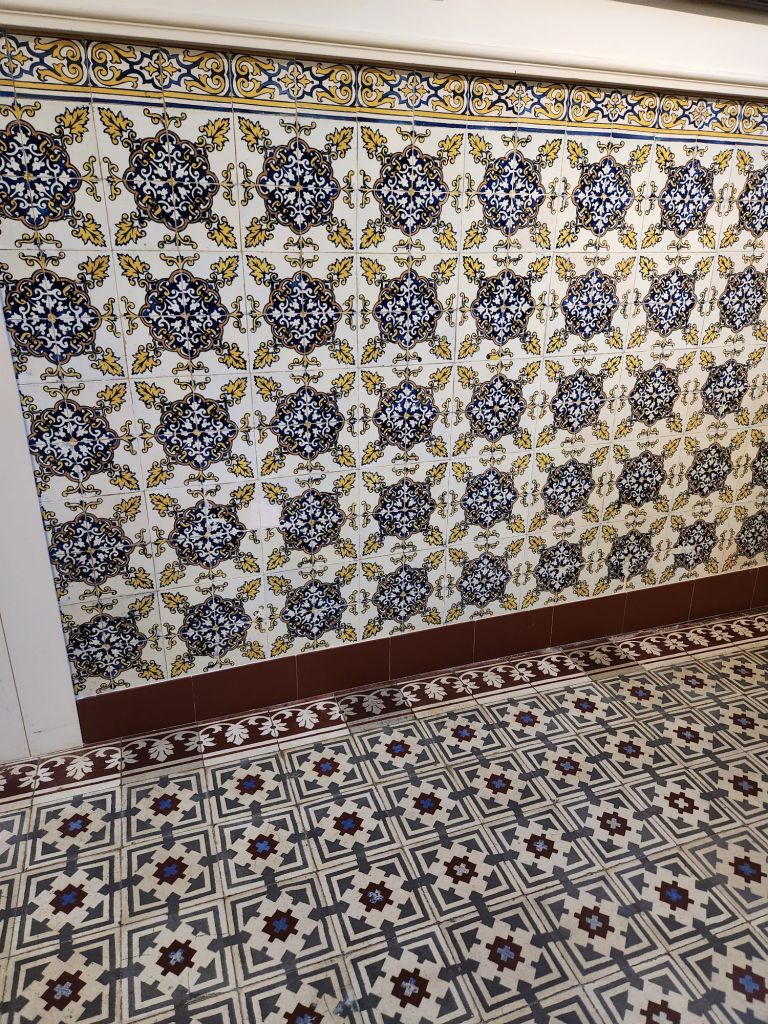
The sign above the door.A pretty fancy staircase to the executive offices.If you squint a bit, you see the staircase looks like a sardine with the light for an eye.I love all the fancy tile in Portugal.
Our guide gave us a bunch of information about fishing and canning in Potugal. They consume more fish here, per capita, than anywhere else in Europe. There used to be over 50 canneries in Matosinhos, but now only 4 remain. Pinhais is a high end cannery that exports 95% of its product. Apparently, since so many Portugese live near the coast, fresh fish is by far the preferred choice.
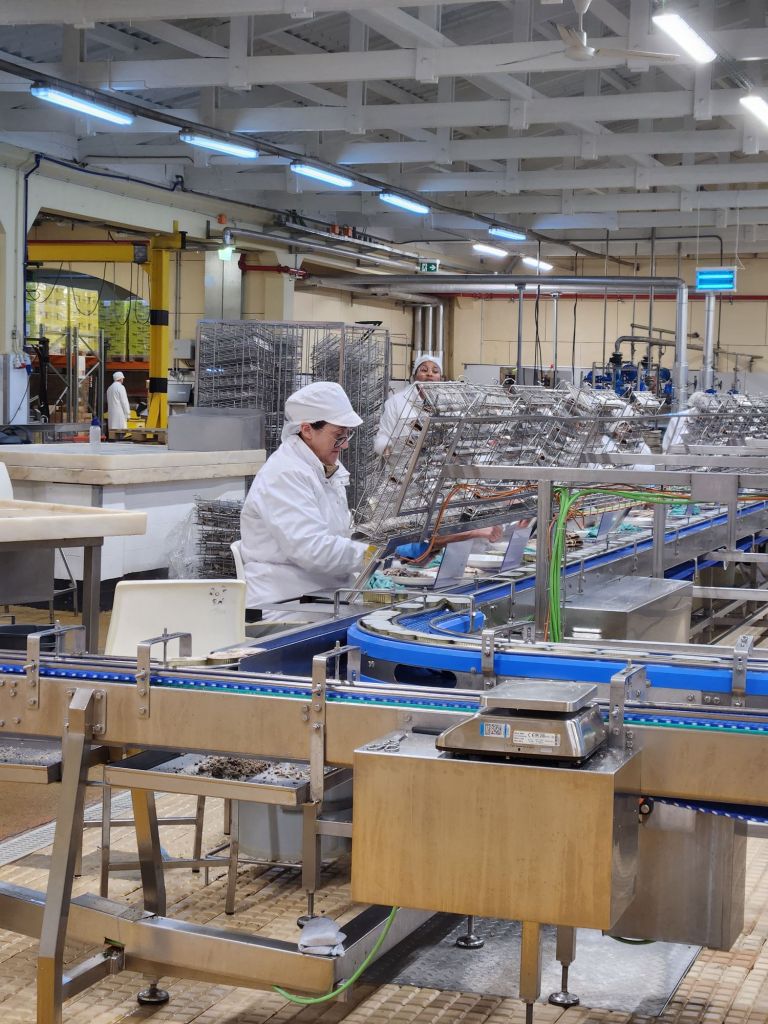
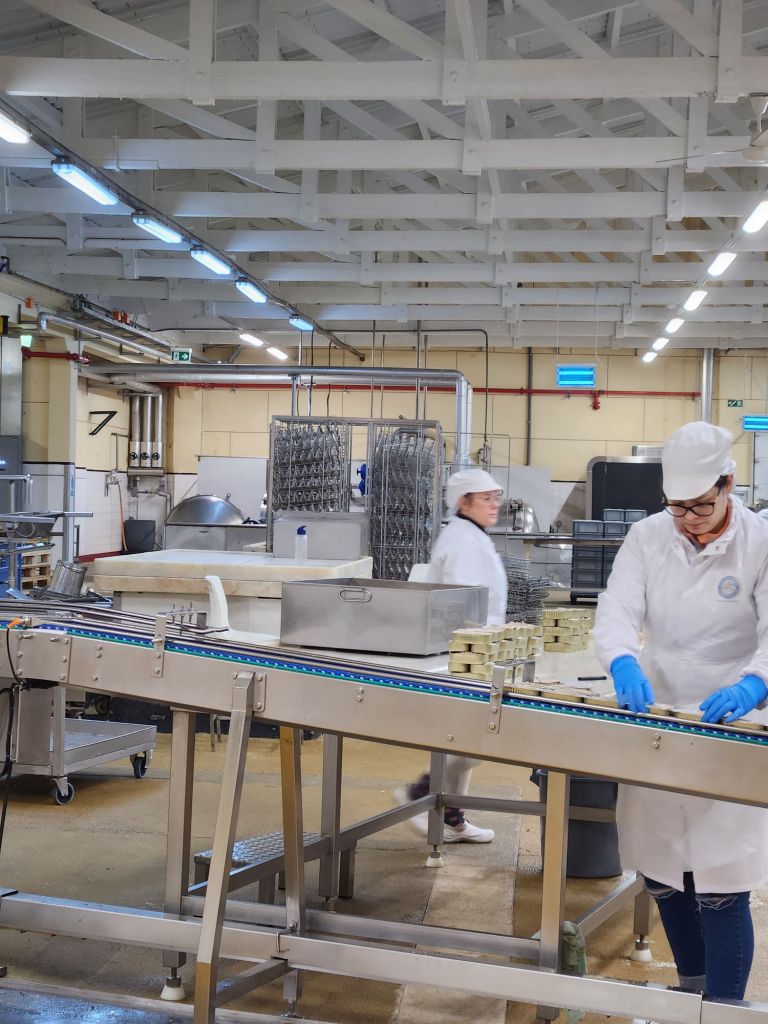
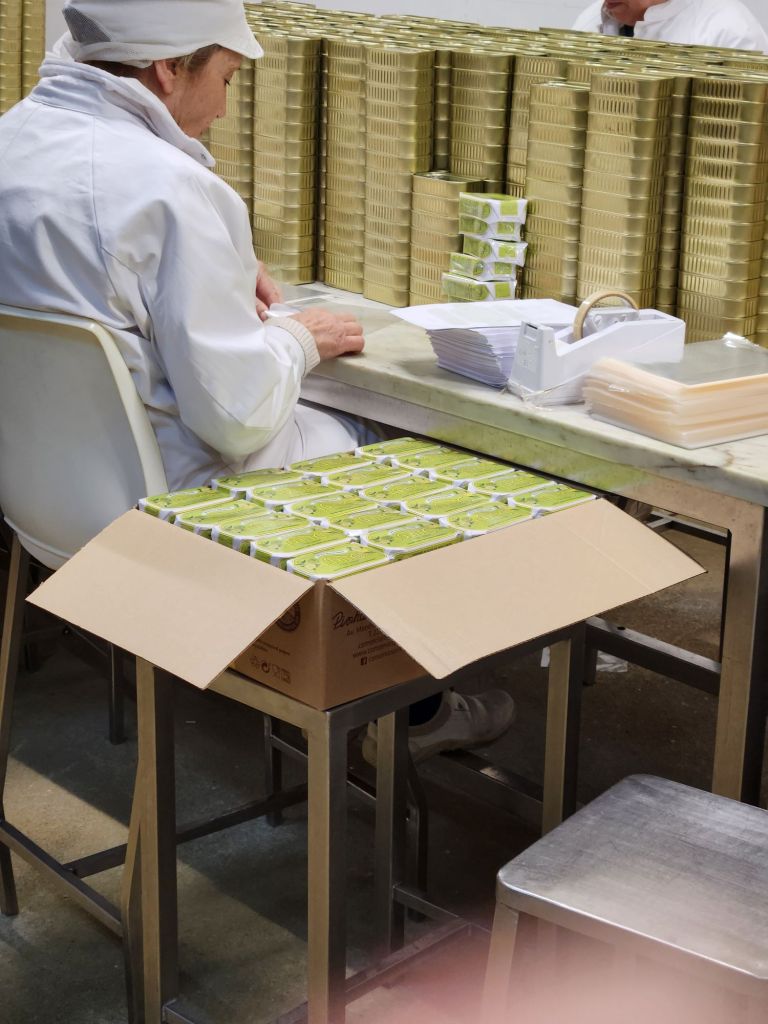
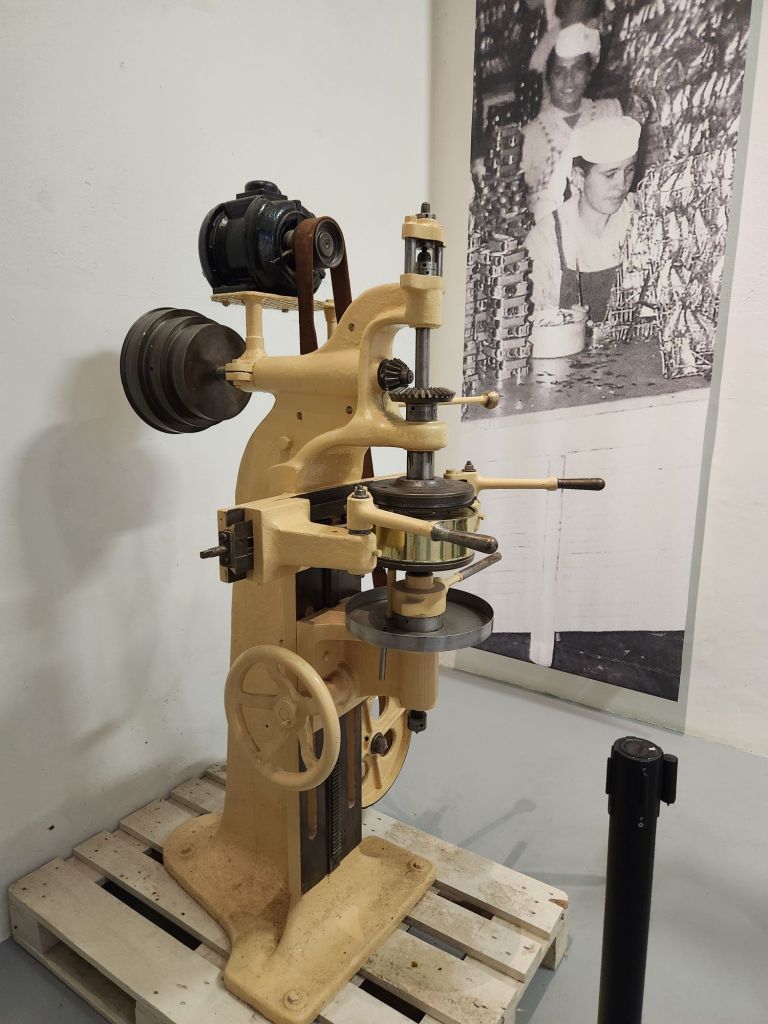
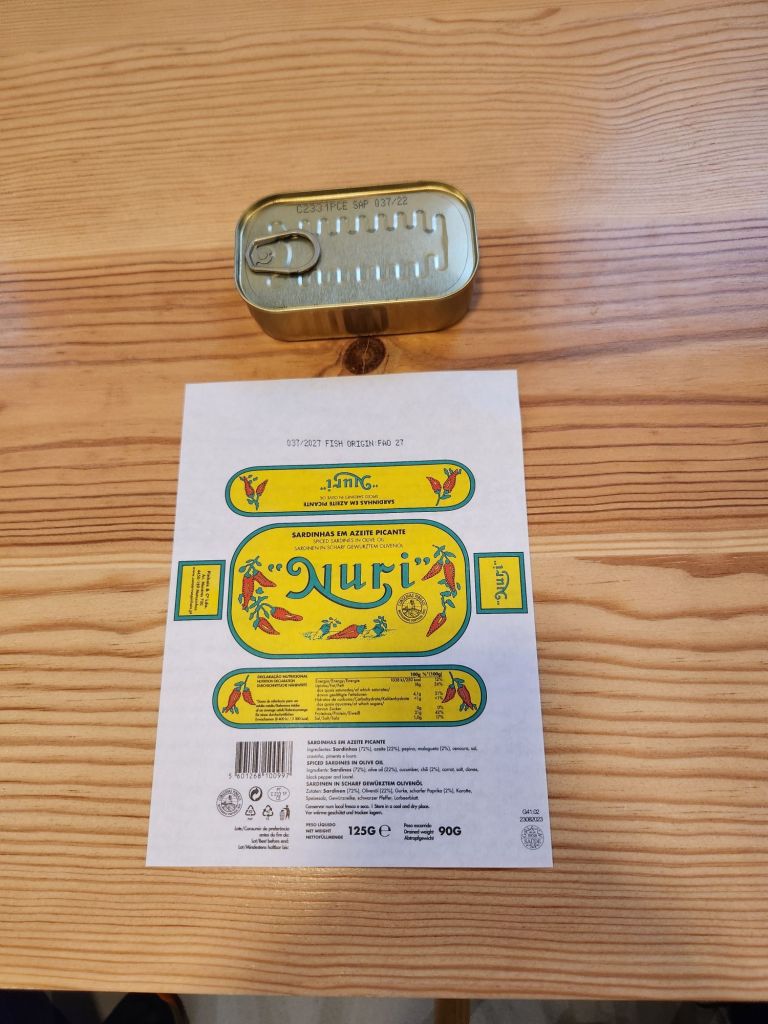
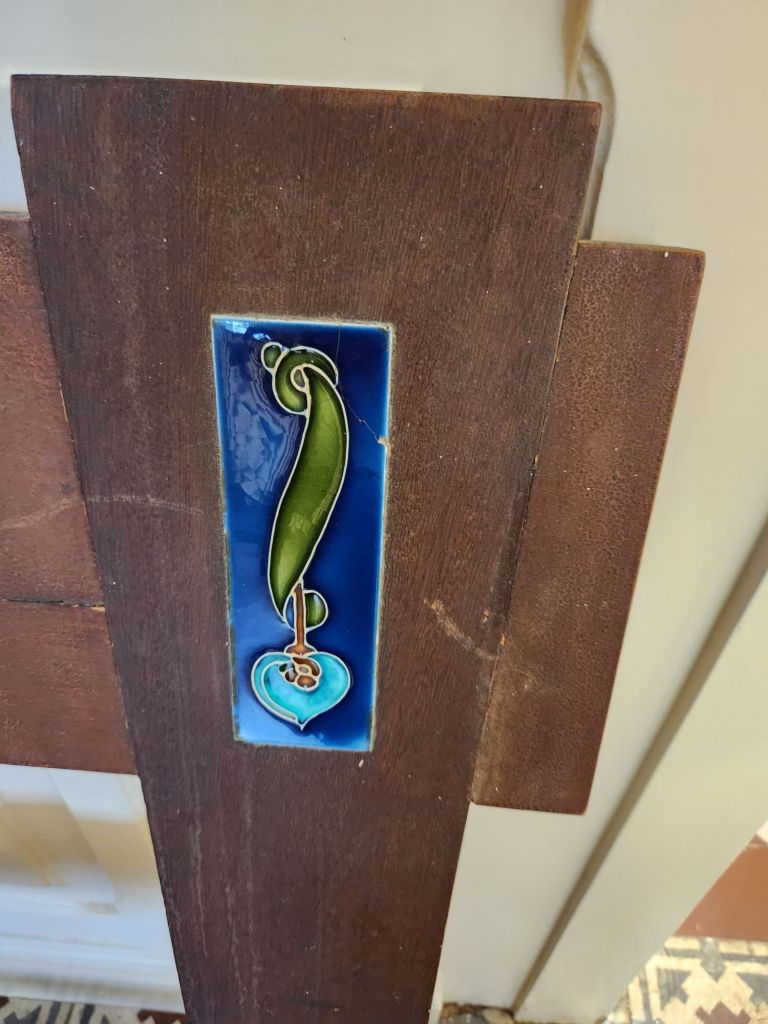
We had to get suited up to hit the production area!Quality control. There are about 120 people working in the factory, and there are 110 women and 10 men on the team. They can produce up to 20,000 to 25,000 cans of sardines a day, which is 5 to 7 tons. This usually happens during the summer season and depends on what’s available at the market. They buy fish daily from the auction at the fish port a few blocks away. The secret ingredient to their success is the tomato sauce, which is made by 2 long-term employees, mentioned by name, in the back room. Apparently, quality control knows the recipe too, but no one is telling!Pinhais is a specialty cannery, and the product is canned almost entirely by hand. They brine the fish, and then they remove the head and guts. When done by hand, this can be done in a single cut. Fortunately, we were there for the afternoon tour, and that process was not happening as we walked through the area. From there, the steam cook the fish, trim them, add the seasonings, and fill the cans. The fish are canned, with olive oil and seasoning – some spicy – and then it “seasons” in the can for at least 90 days before it is hand wrapped with the label. There are 8 women who specialize in wrapping the labels full time. They can wrap 1 can per 9 seconds, about 1400 per day. This doesn’t keep up with the days of maximum canning, but things ebb and flow. For instance, off season, there are days they don’t buy any fish, and everyone wraps. The whole process relies on everyone being able to pitch in. When the fish arrive after they have been purchased, everyone cleans, then they can!A canning machine from back in the day when they also made their own cans.The original desk from the shop, and our wonderful guide Miguel.A can of sardines and a label. Our assignment, wrap the can!Success! They then gave us the opportunity to buy the cans we wrapped. Of course we did!The benches near the entrance had these beautiful tile accents.Our spicy sardine tasting, with wine. Yum!
When the boat broke down the nice lady from England exclaimed "oh goody, an adventure!" That changed the possible problem into a great story and improved attitudes. It has become the motto for our travels. We hope you enjoy the stories as much as we enjoyed the adventure.
View all posts by Adventures of Dan and Lisa
2 thoughts on “Canning Sardines and such in Matosinhos, Portugal”
My dad and husband would have enjoyed this tour! Thank God for the wine! Enjoy!
What fun!! Makes me want to pull out some of my sardine cans that have worked their way to the back of the cabinet! I remember Dad used to love sardines for a weekend lunch. He usually dipped each bite in a bit of mustard and had a beer with it!








 Oh Goody! An Adventure
My dad and husband would have enjoyed this tour! Thank God for the wine! Enjoy!
LikeLike
What fun!! Makes me want to pull out some of my sardine cans that have worked their way to the back of the cabinet! I remember Dad used to love sardines for a weekend lunch. He usually dipped each bite in a bit of mustard and had a beer with it!
LikeLike